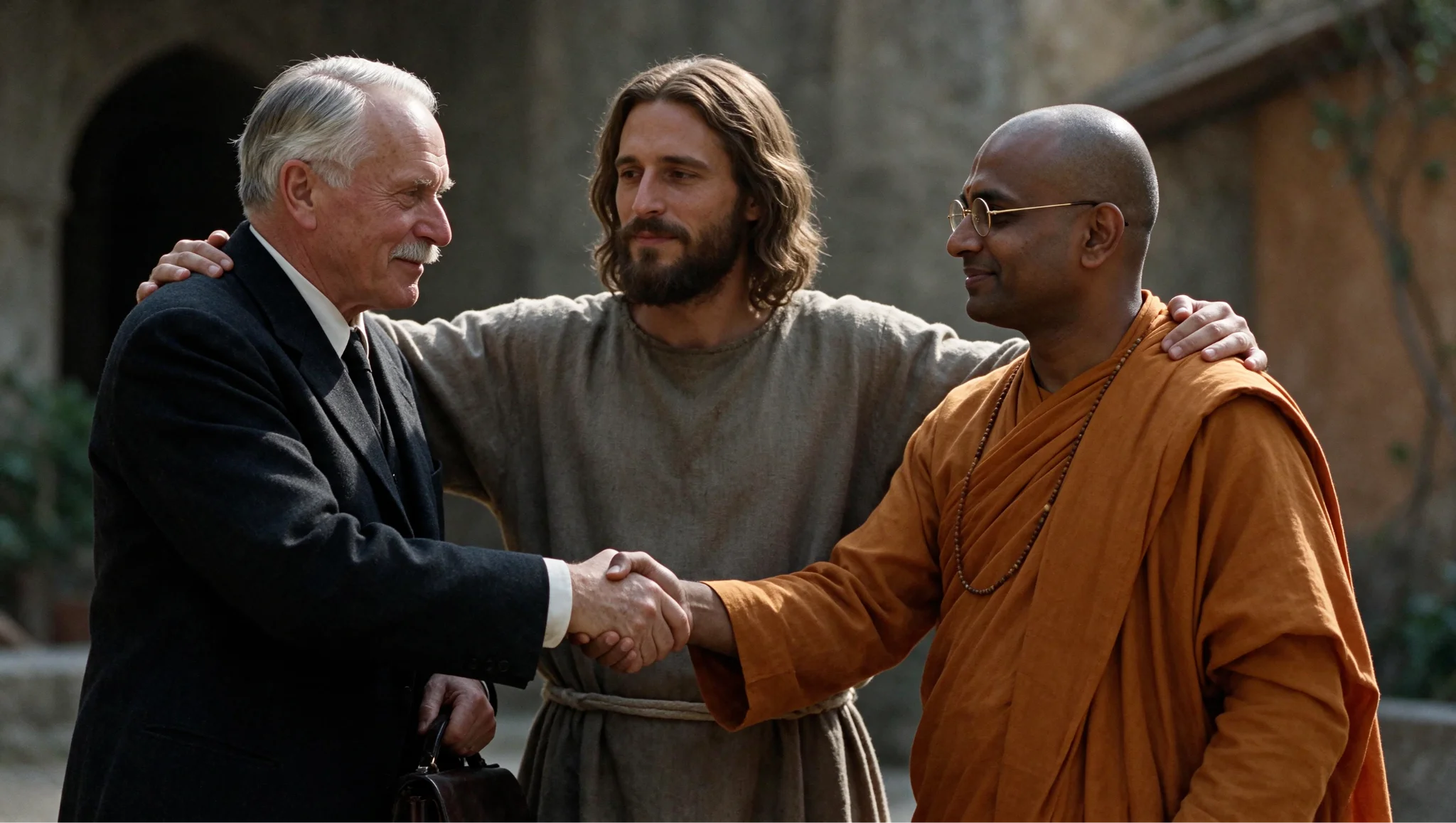
Who am I? Where Psychology and Spirituality Intersect
- November 11, 2026
- Adrian Gudino
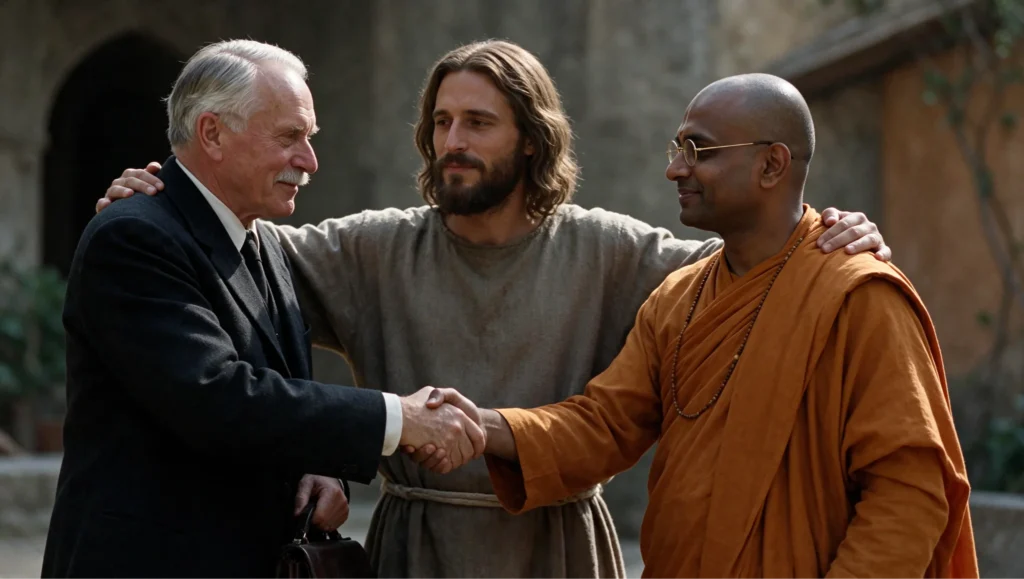
In his development of Internal Family Systems (IFS), therapist Richard Schwartz discovered something fascinating. When his clients learned to separate themselves from their various internal parts, such as the anxious part, the critical part, or the angry part, they consistently encountered something similar beneath them all: a state of curiosity, kindness, calmness, and compassion.
This state of observing ourselves without judgment is what Schwartz called the Self.
But what exactly is this state of observation? Who, or what, is doing the observing? And if I can observe my thoughts, emotions, and even my sense of identity, then who am I really?
These fascinating questions have puzzled psychologists, philosophers, and theologians for centuries. While no answer is entirely satisfying, several traditions point in a similar direction.
Carl Jung and the Collective Unconscious
Carl Jung, whose theories of archetypes and the unconscious helped lay the intellectual groundwork for approaches like IFS, developed an understanding of the Self that evolved throughout his life.
As Jung’s writing became increasingly spiritual and esoteric, his concept of the Self began to take on almost divine qualities.
Jung wrote:
“The self is not only the centre, but also the whole circumference which embraces both conscious and unconscious.”
Carl Jung, Psychology and Alchemy
For Jung, the Self represented the totality of our being, the union of our conscious and unconscious minds. It was something much greater than the ego, which represents only our conscious sense of identity.
Jung also believed that beneath our individual unconscious minds existed a collective unconscious, a shared psychological inheritance connecting human beings through universal patterns and archetypes.
In his later writing, Jung increasingly explored the relationship between the Self and God, even describing the Self as the “God within us.”
The Self in Eastern Spirituality
There are striking echoes of Advaita Vedanta in Jung’s theories.
Advaita Vedanta, an ancient school of Indian philosophy, teaches that Atman, our deepest or true Self, is ultimately identical with Brahman, the infinite reality underlying all existence.
From this perspective, our suffering is partly rooted in a fundamental misunderstanding of who we are. We identify ourselves with our thoughts, emotions, bodies, and individual personalities, rather than recognizing the deeper reality beneath them.
The spiritual journey, then, is not so much about becoming someone different as it is about discovering who we have always been.
This bears a fascinating resemblance to the process of unblending in IFS: learning to step back from the parts of ourselves we’ve mistaken for our entire identity.
The Self in Christianity
But what about Western spirituality, particularly Christianity?
Christ’s declaration that “I and the Father are one” (John 10:30) is an intriguing parallel, although Christian theology understands this unity differently from Advaita Vedanta.
Perhaps even more relevant is Paul’s remarkable statement:
“It is no longer I who live, but Christ who lives in me.” Galatians 2:20
What does Paul mean when he says that it is no longer I who live?
There seems to be a distinction between the self with which Paul previously identified and a deeper identity rooted in Christ.
Within Christian spirituality, this is understood as a transformation of our identity through union with Christ, rather than the discovery that we ourselves are God.
Yet the psychological parallels are fascinating. Both Christianity and IFS invite us to question the identities to which we cling and to discover a deeper source of love, compassion, and peace.
Finding Peace Through the Self
For me, the practical power of this concept is relatively simple.
When I experience psychological distress, I often find myself identifying with a particular part of my mind.
When anxiety takes over, I am anxious. When shame appears, I am worthless. When anger arises, I am angry.
In those moments, I have become so blended with a part that I mistake it for my entire identity.
But something remarkable happens when I begin to separate myself from that part.
Instead of I am anxious, I can recognize that a part of me is anxious.
Instead of I am worthless, I can notice that a part of me feels worthless.
And suddenly, there is space.
Space to observe, to become curious, to extend compassion toward the suffering part rather than being overwhelmed by it.
Richard Schwartz beautifully described this capacity for Self-leadership as becoming the “I” in the storm.
For me, this is also where psychology and spirituality meet.
When I stop identifying so completely with my thoughts and emotions, I become more capable of connecting with my deeper Self, with God, and with the peace Paul describes as transcending all understanding (Philippians 4:7).